
Founder's Story
Why For The 22 Exists
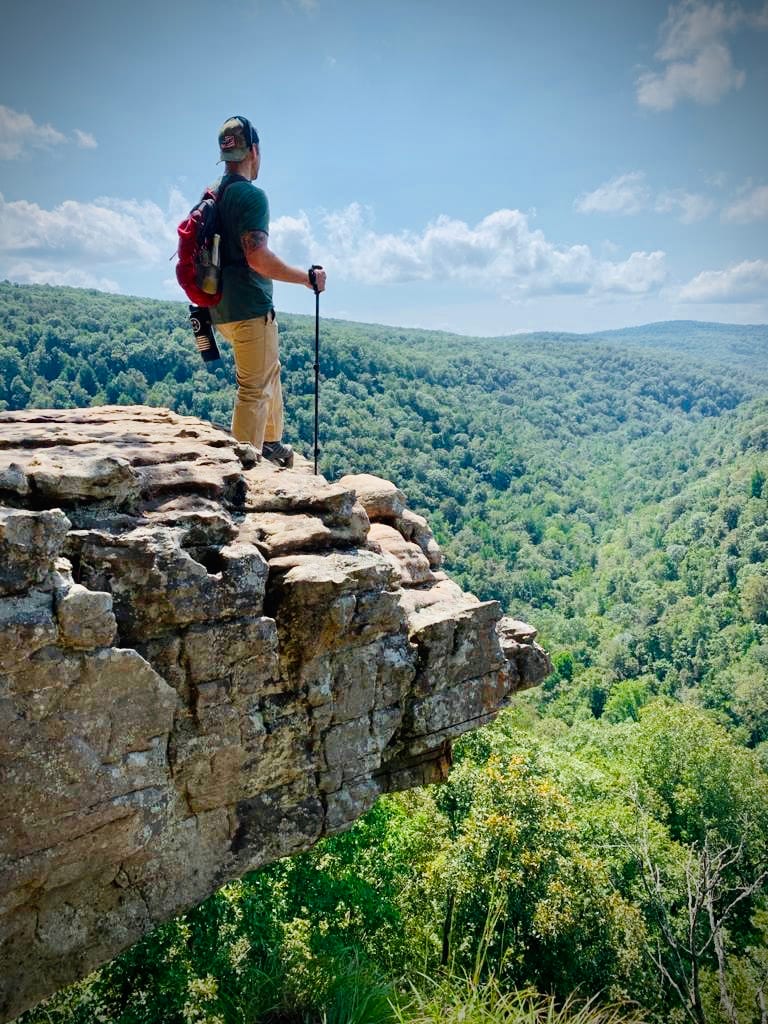
Cody Hitson — Veteran. Husband. Father. Still Moving Forward.
For The 22 grew out of a Navy deployment to Afghanistan, the years of struggle that followed, and a recovery that started with faith and community. This is the story of how one veteran's fight to find a way forward became a mission to help others find theirs.
01 — Service
Seven Years in the Navy
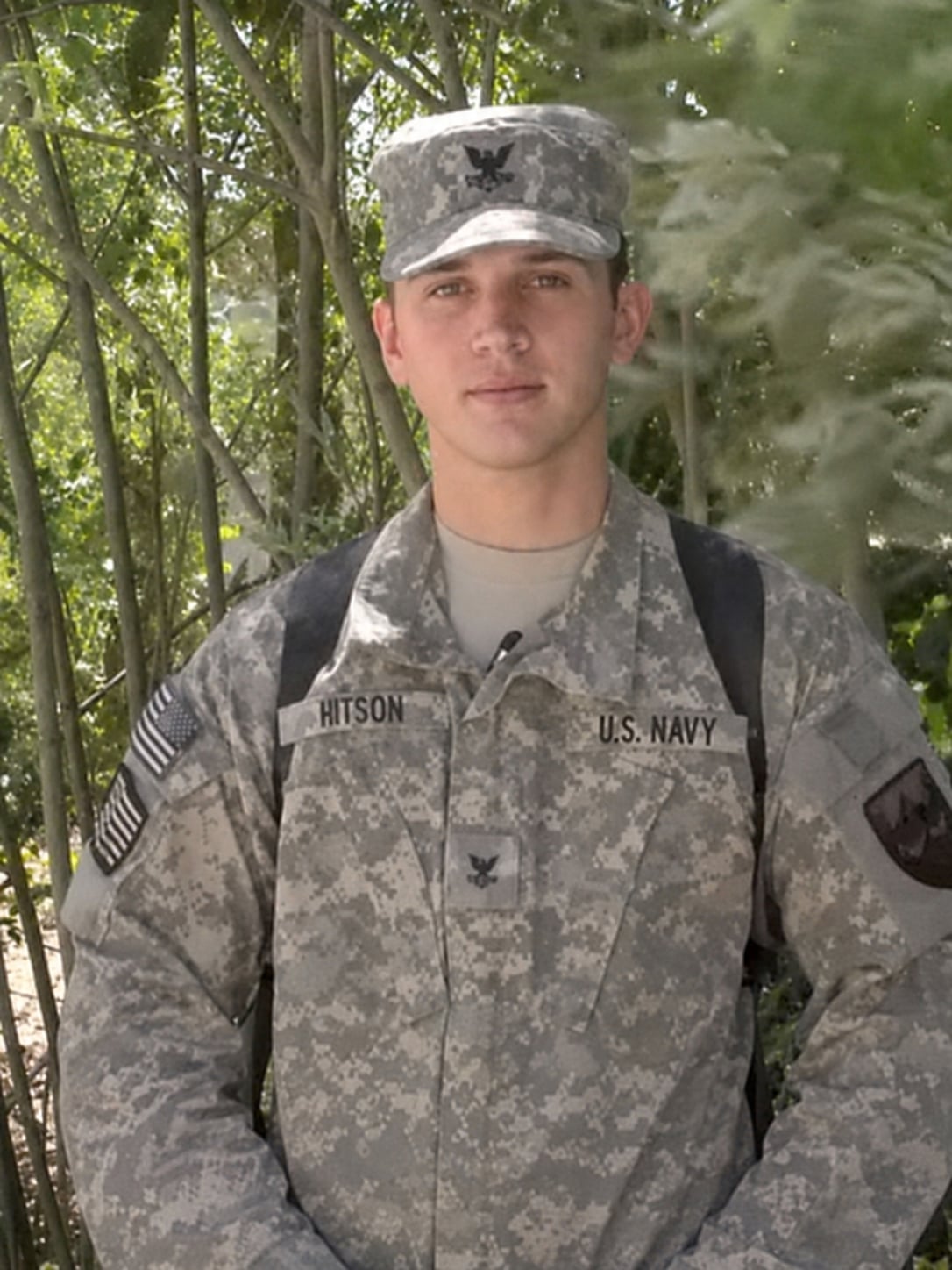
I'm a husband, father, Navy veteran, and endurance athlete. I spent seven years on active duty in the United States Navy as a Mass Communication Specialist.
In 2011, I deployed to Afghanistan in support of Operation Enduring Freedom as a combat journalist — alongside service members operating in an environment where violence, loss, fear, and uncertainty were part of everyday life.
Like a lot of veterans, I came home physically present but carrying things I didn't fully understand how to process.
02 — After
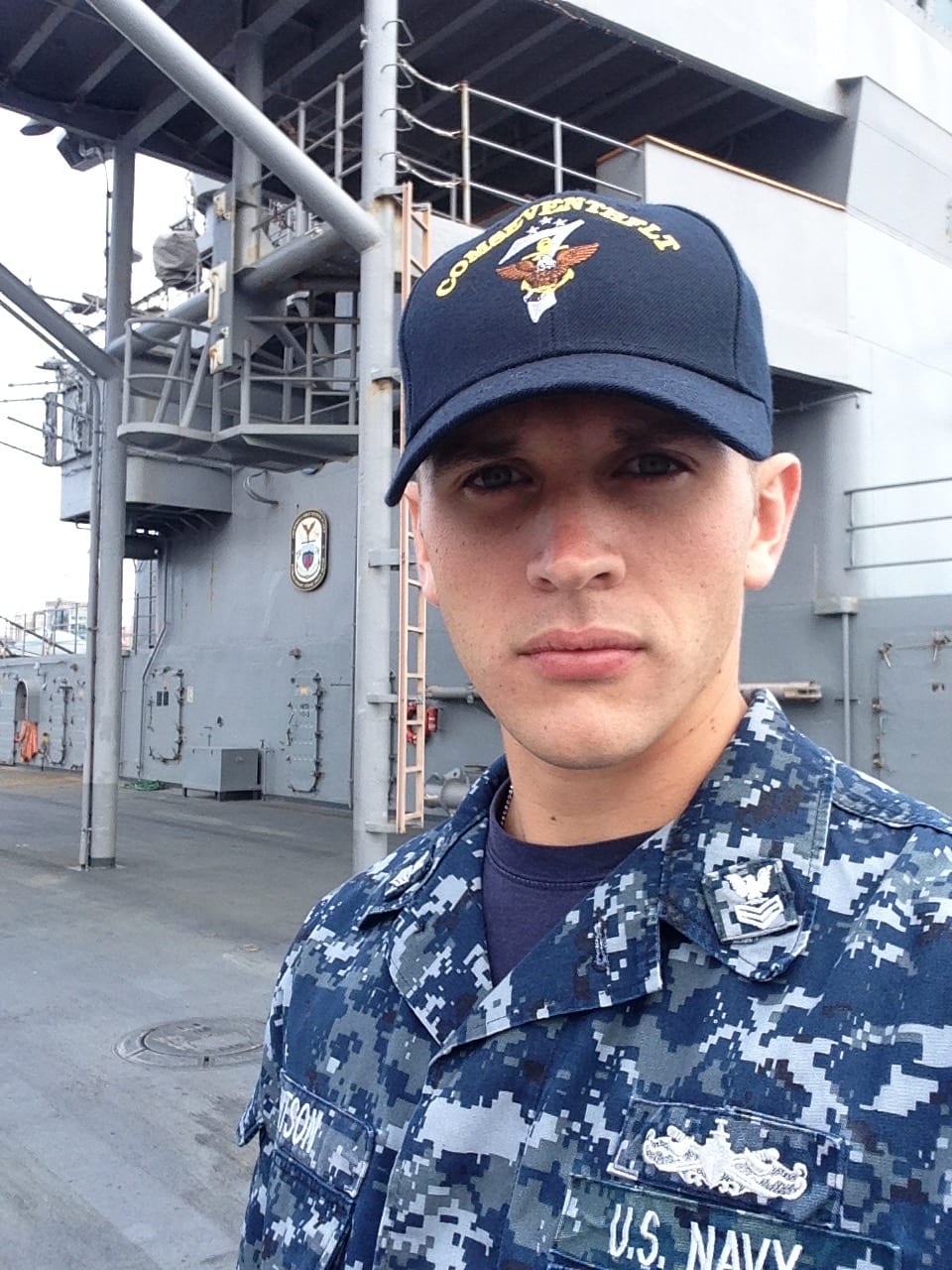
What Came After
I learned how to function. That is not the same thing as learning how to live well.
For years, I found ways to keep moving without dealing with what was underneath. Sometimes that meant burying myself in work. Sometimes it meant pushing harder physically. Sometimes it meant refusing to stop long enough to feel it.
Injuries and physical trauma connected to my service caught up with me. In 2016, it led to major back surgery — and to a season with no clear sense of what came next.
My story includes trauma, mistakes, setbacks, and times I didn't know what the next chapter was supposed to look like.
03 — Turning Point
“...to give unto them beauty for ashes, the oil of joy for mourning, the garment of praise for the spirit of heaviness...”
My faith became the foundation of how I understand recovery, purpose, and the responsibility that comes with surviving hard things — not pretending the ashes never existed, but paying attention to what can be built from them.
But it also includes grace. It includes family. It includes people who showed up when they did not have to. And it includes the realization that surviving something creates an opportunity to help someone else through it.
In 2023, I attended a Mighty Oaks Warrior Program retreat. It became a turning point — a place that helped me look at faith, responsibility, purpose, and relationships through a different lens, and understand that recovery isn't about becoming who I was before. Sometimes it's about becoming someone stronger because of what happened.
That experience showed me how difficult it can be to find the right help at the right time—and why connecting people with established resources matters.
04 — For The 22
How This Became For The 22
I have benefited from people and organizations willing to invest in veterans when it mattered most. Now I want to return that investment. There is another veteran somewhere trying to figure out what comes next — another who needs a mission.
I can't solve that for everyone. But I can build a place that makes it easier to find the right support: a directory of established programs, services, and communities, put together by someone who knows firsthand how hard that search can be.
There is another veteran somewhere trying to figure out what comes next — another who needs a mission.Read the full athletic story at Tri For The 22 →
22 has become a widely recognized symbol of veteran suicide awareness. It's historically significant, but it isn't the current national number — the VA's most recent data (2023) puts the daily average at 17.5 Veterans lost to suicide.
For The 22 also serves first responders — law enforcement, fire, EMS, dispatch, and corrections. Reporting there is far less complete, but the best available estimates suggest a law-enforcement officer is lost to suicide roughly every 2 to 3 days.
Behind every one of those numbers is a family, a team, a unit, and a community left behind — and that's what keeps this work in front of us.
Need Help Now?
If you or someone you know is in crisis, immediate support is available. For The 22 is not a crisis-response service — the organizations listed connect you with people equipped to help.
Get Crisis Support →Black.
Because 22 ≠ 0.
Black is mourning. We wear it for the veterans and first responders we've lost to suicide, trauma, and the invisible battles carried long after the uniform comes off.
We remember those we have lost—and keep showing up for those who are still here.
05 — The Mark
Nothing in the mark is decorative.

Outer Ring
Every branch of the U.S. Armed Forces
Inner Ring
Every sector of first-responder service
The Star
The fallen — those lost in service, and those lost after it
The 22
Remembrance — the number this movement is built against
Outer Ring — Armed Forces
Navy — Navy Blue
Marine Corps — Scarlet
Coast Guard — Coast Guard Blue
Air Force — Air Force Blue
Army — Ranger Green
Space Force — Black
Inner Ring — First Responders
Blue — Law enforcement, police officers, and sheriff deputies
Red — Firefighters and fire rescue departments
White — EMS, paramedics, nurses, and doctors
Gold / Yellow — 911 dispatchers and public safety telecommunicators
Green — Border patrol and federal security
Silver / Grey — Corrections officers and probation staff
06 — What's Next
Where the Mission Is Going
Tri For The 22 has a finish line. For The 22 doesn't. The resource directory keeps growing, the network of beneficiaries and campaign partners keeps expanding, and new campaigns will carry the mission forward long after Chattanooga.
This started as one veteran's idea, but it isn't a one-man operation anymore — it's founder-led and supported by a growing network of volunteers, organizations, clubs, businesses, and campaign partners who've chosen to stand with it. I started it. It's meant to outlast me.